
Let’s be blunt. For decades, Sulfur Hexafluoride (SF6) has been the undisputed heavyweight champion of high-voltage insulation and arc quenching. Its dielectric strength is unparalleled, its arc-extinguishing capabilities are legendary, and its thermal stability in the face of a fault current is frankly, terrifyingly good. It’s why your critical Gas Insulated Switchgear (GIS), Circuit Breakers (CBs), and Gas Insulated Lines (GIL) have been humming along reliably for years.
But SF6 has a dirty secret: it’s the most potent greenhouse gas known to man. With a Global Warming Potential (GWP) of 24,300 over 100 years – meaning one kilogram of SF6 traps as much heat as 24,300 kilograms of CO2 – and an atmospheric lifetime of up to 3,200 years, every leak is an environmental catastrophe. The industry has known this for ages, yet adoption of alternatives has been, shall we say, leisurely. Why? Because replacing something that performs so flawlessly requires more than just marketing fluff; it demands a deep understanding of physics, material science, and the unforgiving realities of grid operation. We’re not just swapping out a lightbulb; we’re fundamentally altering the stress factors on critical grid infrastructure.
The Problem Nobody Talks About
The push to phase out SF6 isn’t new. The EU’s F-Gas Regulation has been tightening the screws, and other regions are following suit. But the transition is fraught with technical compromises that aren’t always openly discussed by vendors eager to sell their “green” solutions. The dirty truth is that while SF6 alternatives exist, none currently offer a direct, drop-in replacement that perfectly matches its performance across all parameters without some form of trade-off. We’re often trading environmental impact for increased footprint, higher operating pressures, more complex thermal management, or a reduced operational envelope.
Consider the classic scenario: a utility in a Nordic country, under pressure to green its grid, piloted an early clean air insulated switchgear for a critical 145kV substation. The manufacturer, keen to tout their “eco-friendly” solution, presented impressive dielectric performance data at standard laboratory temperatures. What they conveniently underemphasized, or perhaps genuinely underestimated, was the liquefaction temperature of the dry air mixture – a blend primarily of nitrogen and oxygen. While significantly lower than water’s freezing point, it wasn’t quite low enough for the absolute worst-case winter conditions in that specific geographical region.
During an unprecedented cold snap, with ambient temperatures plummeting to -45°C, the dry air inside the switchgear partially condensed. This wasn’t a catastrophic freeze, but rather the formation of microscopic liquid nitrogen and oxygen droplets within the gas volume. These micro-droplets, while tiny, dramatically reduced the localized dielectric strength of the insulating medium. During a routine switching operation, a transient overvoltage – well within the design limits for a properly insulated system – found a weak point. The arc, instead of being cleanly quenched by the homogeneous gas, propagated through this partially liquefied medium, causing a catastrophic internal flashover. The resulting fault current, now unimpeded, caused extensive damage to the interrupter and busbar sections, requiring a full replacement and a multi-day outage for a critical load center.
This wasn’t merely a “cold weather” problem; it was a fundamental dew point management and thermal design oversight, where the system’s operating envelope wasn’t rigorously matched to the environmental extremes, driven by a premature desire to ditch SF6 without fully understanding the intricate physics of its replacement. The bitter irony? A traditional SF6 unit, with its much lower liquefaction point (around -47°C at 0.6 MPa, depending on purity), would have shrugged off that temperature without issue. This anecdote underscores a critical lesson: “green” isn’t always “robust” without meticulous engineering and validation against all operational extremes, not just the comfortable averages.
Technical Deep-Dive
SF6’s dominance stems from its unique molecular properties. It’s an electronegative gas, meaning it readily captures free electrons, forming stable negative ions. This process, known as electron attachment, rapidly reduces the number of charge carriers available to sustain an arc, giving it superior arc-quenching capabilities. Its high density and thermal capacity also contribute to cooling the arc plasma, further aiding interruption.
The alternatives attempt to replicate these properties, but none do it perfectly without compromise:
- Vacuum Interrupters (VI): These are the closest to a “direct replacement” for the arc-quenching mechanism, but they only handle the interruption. Insulation still requires a gas or solid dielectric. Vacuum technology is mature for medium voltage (MV) and increasingly common for high voltage (HV) up to 145 kV, but for Ultra High Voltage (UHV) applications, the challenges of maintaining vacuum integrity over large volumes become significant.
- Clean Air / Dry Air / N2/CO2 Mixtures: These are non-fluorinated gases. Dry air, typically at higher pressures (0.6-0.8 MPa), is used for insulation, sometimes combined with vacuum interrupters for arc quenching. Nitrogen (N2) and Carbon Dioxide (CO2) can also be used, often in mixtures. Their dielectric strength is significantly lower than SF6 (around 0.4-0.5 times SF6), meaning larger enclosures are needed, or much higher operating pressures, which introduces mechanical challenges for the tank design and sealing. Their GWP is essentially zero, which is a massive win.
- Fluoronitriles (C5-FK) and Perfluoroketones (C6-FK) (e.g., g³ by GE, NuGen by Siemens, AirPlus by Hitachi Energy): These are synthetic gases or gas mixtures, often blended with CO2, N2, or O2 to lower their liquefaction point and reduce cost. They are designed to mimic SF6’s electron attachment properties. Their GWP is significantly lower than SF6 (typically <10 for the mixtures), and their dielectric strength can approach or even match SF6 at similar pressures. However, they are more expensive, and their liquefaction points are generally higher than SF6, requiring careful consideration for cold climates. Decomposition products, while less toxic than SF6 byproducts, still need proper handling.
Let’s put some numbers to it.
| Parameter | SF6 (Reference) | Dry Air (0.6 MPa) | C5-FK (e.g., g³ at 0.6 MPa) |
|---|---|---|---|
| GWP (100-year) | 24,300 | 0 | ~1-10 |
| Dielectric Strength (rel. to SF6) | 1.0 | ~0.4-0.5 | ~0.8-1.0 |
| Arc Quenching (rel. to SF6) | Excellent | Good | Very Good |
| Liquefaction Point (at 0.6 MPa) | -47°C | -190°C | -30°C to -5°C (mixture dependent) |
| Operating Pressure (typical) | 0.4-0.6 MPa | 0.6-0.8 MPa | 0.4-0.6 MPa |
| Decomposition Products | Toxic, corrosive | Inert | Less toxic, mildly corrosive |
| Footprint (relative) | 1.0 | ~1.5-2.0x | ~1.0-1.2x |
| Cost (relative) | 1.0 | ~1.0-1.2x | ~1.5-2.5x |
 Image Credit: liyond.com
The key takeaway from this table is that Dry Air offers zero GWP but comes with a significant footprint penalty or requires higher pressures. C5-FK offers SF6-like performance with a drastically reduced GWP, but at a higher cost and with a potentially limiting liquefaction point in extreme cold. The engineering challenge is to balance these factors against specific project requirements.
 Image Credit: electrical-engineering-portal.com
Arc quenching physics for SF6 involves rapid thermalization and electron attachment. For alternatives, especially the non-fluorinated ones, the arc interruption relies more on thermal processes and gas flow dynamics to cool and de-ionize the arc plasma. This often necessitates different contact materials, more robust interrupter designs, or increased contact separation distances, all of which impact mechanical design and operational lifespan.
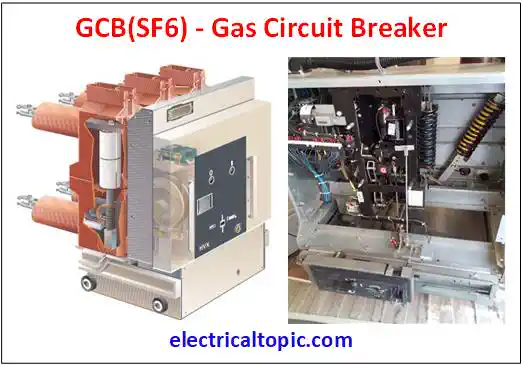 Image Credit: electricaltopic.com
Implementation Guide
Transitioning away from SF6 isn’t a simple swap; it’s a project requiring meticulous planning and execution.
Project Lifecycle for SF6 Replacement
graph TD
    A["Initial Assessment & Feasibility Study"] -->|"Define Scope & Requirements"| B["Technology Selection & Vendor Evaluation"]
    B -->|"Compare Alternatives & Trade-offs"| C["Detailed Design & Engineering"]
    C -->|"Verify Specifications & Compatibility"| D["Procurement & Manufacturing"]
    D -->|"Quality Control & Factory Acceptance"| E["Site Preparation & Installation"]
    E -->|"Mechanical & Electrical Integration"| F["Commissioning & Testing"]
    F -->|"Functional & Performance Validation"| G["Operational Handover & Monitoring"]
    G -->|"Long-Term Performance & Maintenance"| H["SF6 Decommissioning & Recycling"]
    H -->|"Regulatory Compliance & Documentation"| I["Project Completion"]
Key Design Considerations:
- Footprint and Space Constraints: If opting for dry air or N2/CO2 mixtures, be prepared for larger equipment. This is a non-starter for many urban substations where real estate is at a premium. Ensure your site can accommodate the increased dimensions or higher pressures required for compact designs.
- Operating Pressure and Enclosure Design: To achieve comparable dielectric performance, alternatives often operate at higher pressures. This demands more robust pressure vessels, better sealing technologies, and rigorous leak testing. The mechanical integrity of the enclosure becomes even more critical.
- Liquefaction Temperature and Climate: As our anecdote vividly illustrated, the dew point of the alternative gas mixture is paramount. For cold climates, ensure the chosen gas mixture has a liquefaction point well below the absolute minimum expected ambient temperature. Factor in transient temperature drops, not just averages.
- Material Compatibility: New gas mixtures can react differently with existing seal materials, insulators, and contact surfaces. Verify that all internal components are compatible with the selected gas to prevent premature degradation or leakage.
- Monitoring and Diagnostics: Enhanced monitoring systems are crucial. This includes highly sensitive leak detection for the alternative gases, partial discharge monitoring, and regular gas quality analysis. These systems should integrate seamlessly with your existing SCADA and protection relays. For more on maintaining switchgear health, you might want to review our article on predictive-maintenance-for-switchgear.
- Safety Protocols: While alternatives are generally less harmful than SF6 decomposition products, specific handling procedures, PPE, and ventilation requirements still apply. Train your personnel thoroughly on the properties and safe handling of the new gases.
- Regulatory Compliance: Stay abreast of evolving local and international regulations (e.g., EU F-Gas, EPA initiatives). This will influence technology choices and reporting requirements.
Failure Modes and How to Avoid Them
Beyond the liquefaction issue, SF6 alternatives introduce their own set of potential failure mechanisms:
- Increased Contact Erosion: With some alternative arc-quenching mechanisms, particularly those relying more on thermal cooling than electron attachment, the arc duration might be slightly longer or hotter. This can lead to accelerated wear and tear on the contacts, reducing the operational life of the interrupter.
- Mitigation: Specify interrupters designed for the specific alternative gas, often featuring optimized contact materials (e.g., CuCr alloys), enhanced arc-quenching nozzles, or multi-break designs. Regular condition monitoring of contact resistance is vital.
- Pressure Containment Issues: Higher operating pressures for dry air or N2/CO2 systems place greater stress on gaskets, seals, and the enclosure itself. Substandard manufacturing or improper installation can lead to leaks, compromising dielectric integrity.
- Mitigation: Demand rigorous factory pressure testing (e.g., hydrostatic testing) beyond standard specifications. Implement stringent on-site leak detection during commissioning using calibrated sniffers, and regular monitoring throughout the operational life. Use only high-quality, proven seal materials compatible with the higher pressures.
- Partial Discharge (PD) Activity: Voids, sharp edges, or contamination within the insulation system can lead to localized electrical discharges that don’t immediately cause a flashover but degrade insulation over time. The dielectric strength of alternatives might be more sensitive to these imperfections.
- Mitigation: Emphasize meticulous manufacturing processes, including cleanroom assembly and rigorous internal quality checks. Implement comprehensive Factory Acceptance Testing (FAT) and Site Acceptance Testing (SAT), including PD measurements, to detect issues before energization.
- Incompatible Material Interactions: If not carefully selected, seals, O-rings, or even certain polymers within the switchgear could react chemically with the new gas mixtures, leading to embrittlement, swelling, or gas permeation.
- Mitigation: Demand comprehensive material compatibility reports from the manufacturer. Verify that all components have been tested for long-term exposure to the specific gas mixture under operational temperature and pressure cycles.
- Arc Byproducts: While generally less problematic than SF6 decomposition products, some fluoronitriles can still produce mildly corrosive or irritating byproducts when subjected to an arc. In enclosed spaces, these can pose health risks during maintenance.
- Mitigation: Implement robust ventilation systems for maintenance operations. Ensure personnel are trained in the safe handling of decomposed gases and equipped with appropriate personal protective equipment (PPE), including gas masks and self-contained breathing apparatus where necessary.
When NOT to Use This Approach
Despite the environmental imperative, there are legitimate scenarios where transitioning from SF6 might not be the most pragmatic or even safe option right now:
- Extreme High Voltage (EHV) and Ultra High Voltage (UHV) Applications: For 400kV and above, the sheer dielectric strength and arc-quenching capabilities of SF6 are still largely unmatched by commercially mature alternatives without significant design compromises. The increased footprint or pressure requirements for alternatives at these voltage levels can be prohibitive.
- Severe Space Constraints: In urban substations or retrofits where the physical footprint is absolutely non-negotiable, the larger dimensions often required by non-fluorinated gas alternatives (e.g., dry air) can make them impractical.
- Extreme Cold Climates with High Liquefaction Points: If a project is located in a region prone to extreme, prolonged sub-zero temperatures (e.g., below -30°C to -40°C), and the chosen alternative gas mixture has a relatively high liquefaction point, the risk of condensation and dielectric failure might outweigh the environmental benefits. While heating systems can mitigate this, they add complexity, cost, and energy consumption.
- Budgetary Limitations for Retrofits: While new installations can be designed around alternatives, replacing existing SF6 GIS with non-SF6 technology often involves a full bay replacement, which can be significantly more expensive than simple component upgrades. If the existing SF6 equipment has significant remaining life and the budget for a complete overhaul is absent, a strategic leak detection and repair program for the SF6 might be a more fiscally responsible interim solution.
- Lack of Proven Field Experience: For very nascent alternative technologies, especially those not yet standardized or widely deployed, the lack of long-term field data might present an unacceptable reliability risk for critical infrastructure. Early adopters bear a higher risk burden.
Conclusion
The shift away from SF6 is not just an environmental obligation; it’s an engineering challenge that demands rigor, skepticism, and a deep understanding of physics. There are no magic bullet solutions, only carefully engineered compromises. Vendors will peddle their “sustainable innovations,” but it’s our job, as the engineers who actually keep the lights on, to cut through the marketing fluff and evaluate these technologies based on hard data, validated performance, and a comprehensive understanding of their operational envelopes.
The future of high-voltage switchgear is undeniably SF6-free, but that future won’t be built on wishful thinking. It will be built on robust design, meticulous testing, and a healthy dose of cynicism about anything that promises perfection without acknowledging the trade-offs. Choose your green angel wisely, because the grid has no patience for half-baked solutions.
Hero image: A large metal structure with wires.. Generated via GridHacker Engine.


